

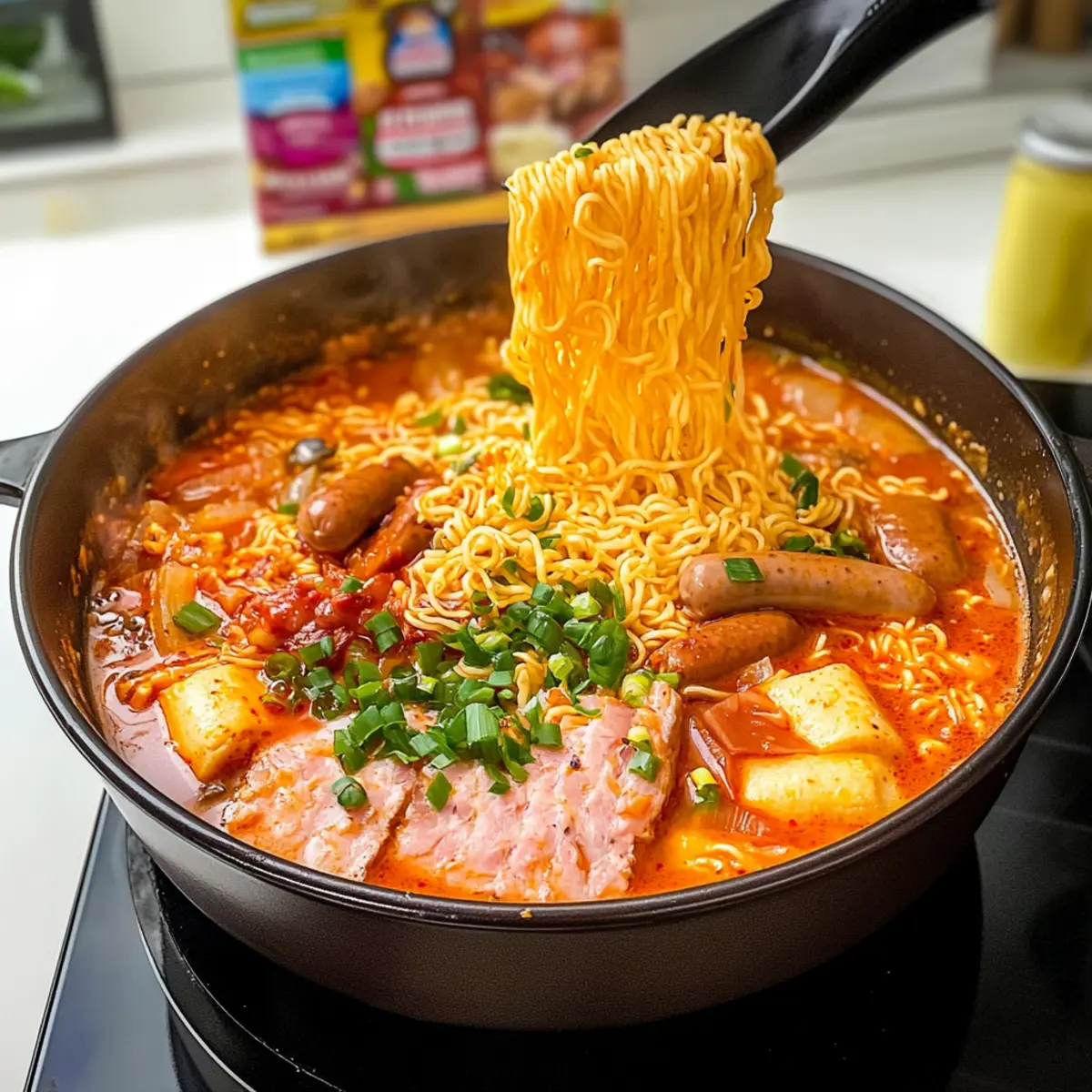
The first steam from the pot draws me in, wrapping my senses in a warm hug of spice and savory richness. This One-Pot Budae Jjigae recipe transforms the humble ingredients of Korean army stew into a dish that feels like a cozy gathering around the table, perfect for any occasion. Not only is it a comforting meal that warms the soul, but it’s incredibly customizable, allowing you to adapt it with whatever you have on hand. Whether you’re a fan of kimchi and Spam or prefer a plant-based twist with tofu and veggies, this hearty stew invites you to make it your own. Curious how such a simple dish can pack so much personality? Let’s dive in!
Why is Budae Jjigae So Loved?
Comforting, Hearty Meal: Budae Jjigae wraps you in warmth, making it the perfect dish for chilly nights or when you crave something cozy.
Customizable Delight: With endless ingredient swaps, this stew caters to every palate – from savory Spam lovers to veggie enthusiasts enjoying a tofu twist.
Quick & Easy: This one-pot wonder comes together in just a fraction of the time, making it an ideal choice for busy weeknights.
Flavors that Wow: The combination of spices, kimchi, and savory broth creates a deliciously rich flavor profile that’ll keep your taste buds dancing.
A Crowd-Pleaser: Whether it’s a casual family dinner or a gathering with friends, everyone will be drawn to this delicious pot of goodness. Serve it with sides like Fashioned Banana Bread or Crispy Honey Chicken to make the meal unforgettable.
Budae Jjigae Recipe Ingredients
For the Stew
- Kimchi – Adds tanginess and depth of flavor; any variety enhances heat and complexity.
- Spam – Provides a salty, umami flavor; substitute with cooked chicken or tofu for a healthier option.
- Sausages – Contributes protein and spice; smoked sausage enhances the smokiness.
- Mushrooms (Enoki or others) – Adds a meaty texture; shiitake or button mushrooms can be used for a different flavor.
- Tofu – Offers a soft texture and protein; firm tofu is best as silken tofu may break apart easily.
- Rice Cakes (Tteok) – Gives a chewy texture; can replace with other noodles or omit for a lower-carb option.
- Onion – Adds sweetness and aromatic depth; any onion is suitable, shallots can be a fine substitute.
- Garlic – Enhances the stew with robust flavor; fresh is recommended over powdered for better taste.
- Chicken Broth – Forms the base of the stew’s liquid; replace with vegetable broth for a vegetarian version.
- Ramen Noodles – A key element for heartiness; instant noodles are recommended for convenience.
- Cheese (optional) – Adds creaminess and flavor; mozzarella or cheddar can be used, or omit for a dairy-free version.
- Green Onions – For garnish, adding freshness; chopped cilantro can substitute for a different herbaceous note.
For the Sauce Mixture
- Gochugaru – Provides spice and flavor; adjust based on desired spiciness.
- Gochujang – Adds depth and richness; a little goes a long way in enhancing the stew.
- Soy Sauce – Contributes saltiness and umami; feel free to use low-sodium varieties if preferred.
- Mirin – Offers sweetness and balance; can be replaced with rice vinegar mixed with sugar for a similar effect.
- Sugar – To balance the flavors; use honey or maple syrup as a natural sweetener if desired.
- Black Pepper – Adds slight heat and depth; freshly ground pepper brings out the best flavor.
This Budae Jjigae recipe is an incredible canvas for flavor, allowing you to customize it to your heart’s content!
Step‑by‑Step Instructions for Budae Jjigae Recipe
Step 1: Prepare the Sauce Mixture
In a mixing bowl, combine minced garlic, gochugaru, gochujang, soy sauce, mirin, sugar, and black pepper. Stir until well-blended, creating a vibrant sauce that will evoke the rich flavors of a traditional Budae Jjigae. Set this flavorful mixture aside, as it will be essential for seasoning the stew.
Step 2: Assemble the Ingredients
Grab a shallow pot and layer the ingredients. Start with Spam, sausages, tofu, rice cakes, onion, mushrooms, and kimchi, artfully arranging them for even cooking. Once all ingredients are in, pour the prepared sauce and chicken broth over the top, ensuring everything is well-coated. Cover the pot and bring it to a boil over medium-high heat, signaling the start of the stew-making magic.
Step 3: Simmer for Flavor
Once the pot reaches a vigorous boil, adjust the heat to medium-low and remove the lid. Allow the mixture to simmer for about 10 minutes, letting the flavors meld together beautifully. You’ll notice the aroma filling your kitchen as the ingredients soften and the broth develops a rich color, inviting everyone to gather around.
Step 4: Add Noodles and Cheese
After simmering, it’s time to introduce the ramen noodles to your Budae Jjigae. Carefully stir them into the bubbling pot, placing them atop the stew for even cooking. If you like, sprinkle cheese over the noodles, then cover the pot once more. Cook for an additional 3-5 minutes, or until the noodles are tender and the cheese is melted, creating a creamy layer on top.
Step 5: Garnish and Serve
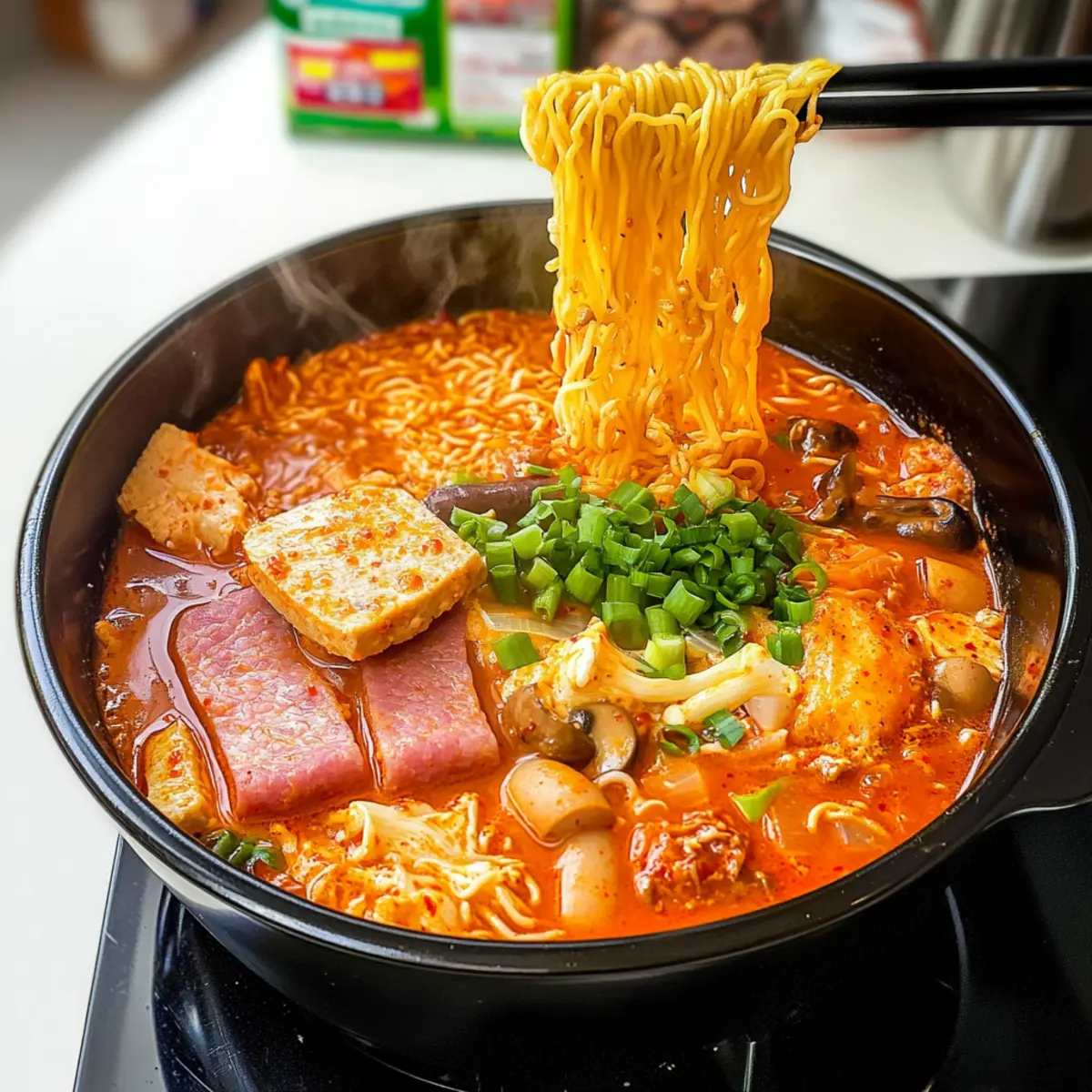
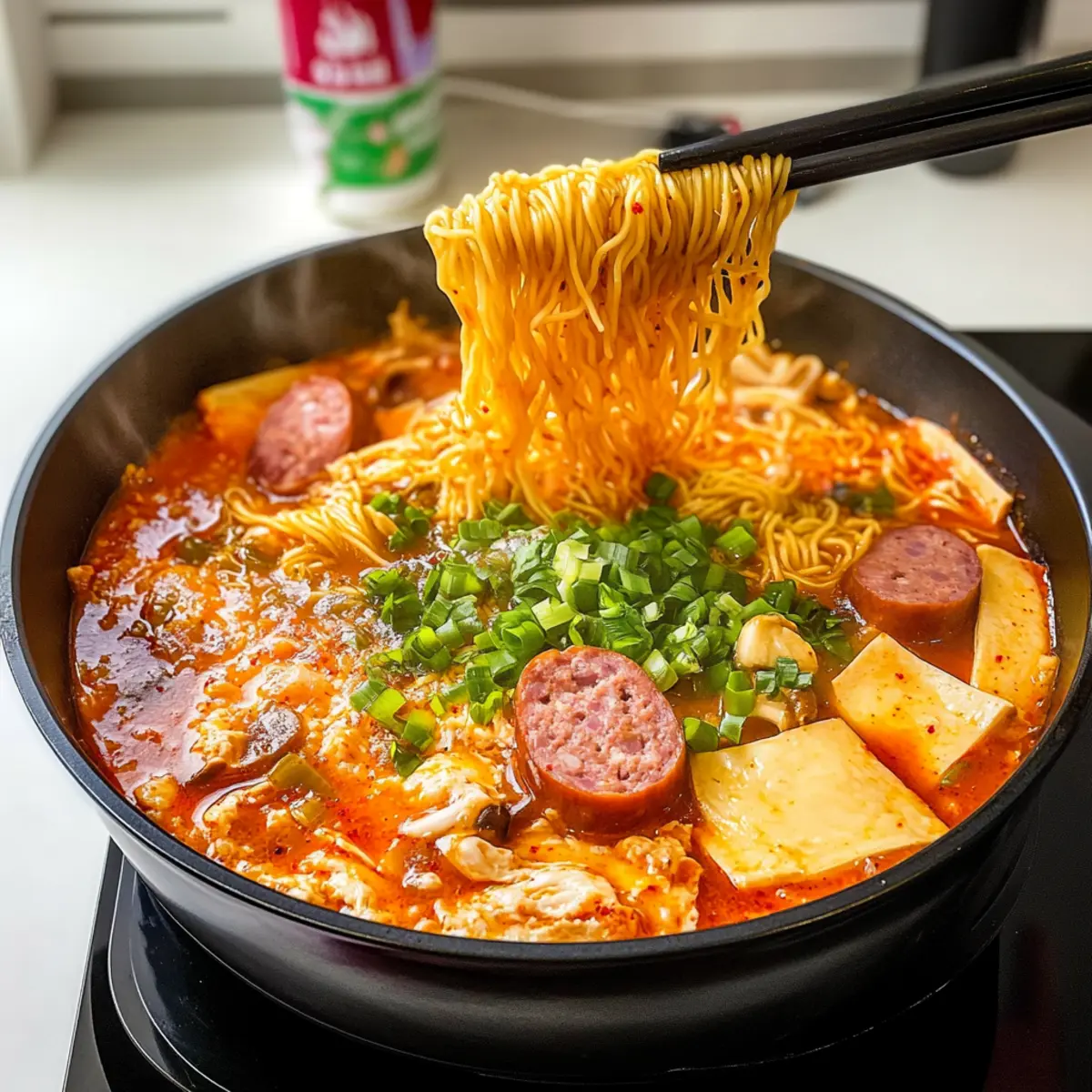
Finally, remove the pot from heat and unveil your delicious creation! Garnish the Budae Jjigae with chopped green onions, adding a fresh pop of color and flavor. Serve hot, inviting friends and family to dig in while the stew is bubbling and the delicious aromas entice their senses. Enjoy the warmth of this hearty dish!
Expert Tips for Budae Jjigae
- Select Quality Kimchi: Choose high-quality, fermented kimchi for the best umami flavor; it significantly enhances the overall taste of your Budae Jjigae.
- Watch Noodle Cooking Time: Be mindful of the ramen noodles; overcooking can lead to mushiness. Aim for tender noodles to avoid a watery stew.
- Ingredient Flexibility: Feel free to adjust or swap out ingredients based on what you have at home; this flexibility helps you make the perfect Budae Jjigae tailored to your preferences.
- Taste and Adjust Seasoning: Always taste the broth before serving; feel free to adjust seasoning with extra soy sauce or gochugaru to suit your spice level.
- Add Nutritional Boosts: Enhance your stew by throwing in more vegetables like bok choy, spinach, or zucchini, making it healthier and more colorful.
Make Ahead Options
Budae Jjigae is a fantastic choice for meal prep, allowing busy cooks to savor the deliciousness of this comforting stew with ease. You can chop and refrigerate your vegetables (like onion and mushrooms) and protein (Spam, sausages, or tofu) up to 24 hours in advance, ensuring they remain fresh. Moreover, prepare the sauce mixture ahead of time and store it in an airtight container for up to 3 days. When it’s time to enjoy, simply combine all the ingredients in a pot, add the chicken broth, and bring it to a boil. Continue with the recipe by adding noodles and cheese, and your hearty Budae Jjigae will taste just as good as when freshly made!
What to Serve with One-Pot Budae Jjigae?
Experience a symphony of flavors as you build a complete meal around this hearty stew, perfect for cozy gatherings.
- Steamed Rice: A classic accompaniment that soaks up the rich broth while adding a comforting, fluffy texture.
- Kimchi: Tangy and spicy, this palette-cleansing side provides depth and enhances the traditional experience. Pair it with a spoonful of rice!
- Pickled Vegetables: Bright, crisp, and refreshing, these add a burst of acidity to balance the savory warmth of the stew.
- Korean Pancakes (Jeon): These savory pancakes are crispy on the outside and soft within, making them a delightful treat to enjoy alongside the stew.
- Miso Soup: Light and comforting, miso soup helps to cleanse the palate between bites and complements the hearty flavors of Budae Jjigae.
- Soda or Sparkling Water: A refreshing drink can be a perfect way to cool down after enjoying the spicy warmth of the stew.
- Fruit Sorbet: A light, refreshing dessert to round off the meal, providing a fruity finish that contrasts beautifully with the savory stew.
- Korean Fried Chicken: Crispy and flavorful, this dish elevates your feast, creating a delicious spread that your family and friends will love.
- Dusty Cheesecake: End on a sweet note with this creamy delight, making the perfect culinary journey from savory to sweet!
- Chilled Soba Noodles: Light and refreshing, these can serve as a delightful contrast, garnished with sesame oil and fresh veggies.
Create a memorable dining experience that showcases the heartiness of your Budae Jjigae Recipe!
Budae Jjigae Recipe Variations
Feel free to unleash your creativity and customize this dish in ways that delight your palate and suit your pantry!
-
Dairy-Free: Omit cheese entirely or use a dairy-free alternative like nutritional yeast for a cheesy flavor without the dairy.
-
Plant-Based: Replace Spam and sausages with marinated tempeh or more mushrooms, creating a hearty vegetarian version that’s just as satisfying.
-
Extra Veggies: Toss in vibrant additions like spinach, bell pepper, or zucchini. This not only ups the nutrition but also adds beautiful pops of color.
-
Heat Level: For spice lovers, add fresh sliced chili or a dash of Sriracha. This way, you can customize the heat to your heart’s desire!
-
Noodle Twist: Swap out ramen for udon or rice noodles. Each type brings its own texture, creating a new culinary experience with every bite.
-
Fusion Style: Experiment with flavors by adding a dash of curry powder or coconut milk for a fusion twist, making for a flavorful stew you won’t forget!
-
Asian Inspired: Incorporate miso into the broth or sprinkle sesame seeds on top to enhance the umami flavor without altering the classic vibe.
-
Hearty Addition: For something extra filling, try adding dumplings or wontons. As they cook, they infuse the stew with lovely flavors, making it even more comforting.
With so many delicious options, you absolutely can tailor the Garlic Parmesan Chicken to your liking, ensuring every bowl of Budae Jjigae feels like a warm hug!
How to Store and Freeze Budae Jjigae
Fridge: Store any leftovers in an airtight container for up to 3 days. Make sure the stew is cooled before sealing to retain freshness.
Freezer: Budae Jjigae can be frozen for up to 2 months. Portion it into airtight freezer bags or containers, ensuring to remove as much air as possible.
Reheating: When ready to enjoy, gently reheat on the stovetop over medium heat, adding a splash of water or broth if the stew thickens. Stir occasionally until heated through.
Make-Ahead Tips: Prepare the Budae Jjigae in advance for an easy weeknight meal. Store in the fridge after cooking and simply reheat when you’re ready to serve.

Budae Jjigae Recipe FAQs
What type of kimchi should I use for Budae Jjigae?
Choosing high-quality kimchi is essential for achieving the best flavor in your Budae Jjigae. Look for well-fermented varieties that add depth and umami. Napa cabbage kimchi is a classic choice, but feel free to experiment with radish or cucumber kimchi for different flavors.
How should I store leftover Budae Jjigae?
Store any leftovers in an airtight container in the refrigerator for up to 3 days. Ensure that the stew cools completely before sealing the container to help keep the flavors fresh and vibrant.
Can I freeze Budae Jjigae?
Absolutely! You can freeze Budae Jjigae for up to 2 months. Portion it into airtight freezer bags or containers, removing as much air as possible to prevent freezer burn. When you’re ready to enjoy, thaw it overnight in the refrigerator and gently reheat on the stovetop, adding water or broth as needed.
What if my noodles are mushy after cooking?
Overcooked noodles can make the stew watery and less appetizing. To prevent this, keep an eye on the cooking time; aim for tender but not mushy noodles, about 3-5 minutes of cooking. If the noodles do become mushy, consider adding more broth or vegetables and serve it as a hearty soup instead.
Is Budae Jjigae suitable for everyone, including those with dietary restrictions?
Yes! One of the beauties of Budae Jjigae is its adaptability. You can easily make it gluten-free by using gluten-free soy sauce and choosing appropriate noodles. For a vegetarian option, substitute the meat with pressed tofu and use vegetable broth. Always double-check ingredient labels to ensure they meet your dietary needs.
Budae Jjigae Recipe: Comforting One-Pot Korean Delight
Ingredients
Equipment
Method
- In a mixing bowl, combine minced garlic, gochugaru, gochujang, soy sauce, mirin, sugar, and black pepper. Stir until well-blended.
- Grab a shallow pot and layer the ingredients, starting with Spam, sausages, tofu, rice cakes, onion, mushrooms, and kimchi. Pour the prepared sauce and chicken broth over the top.
- Bring the mixture to a vigorous boil over medium-high heat, then adjust the heat to medium-low and remove the lid. Allow the mixture to simmer for about 10 minutes.
- Carefully stir in the ramen noodles and sprinkle cheese on top, cover the pot, and cook for an additional 3-5 minutes.
- Remove the pot from heat and garnish with chopped green onions. Serve hot.