

As I stirred the fragrant mix of garlic and ginger in a hot wok, a waft of nostalgia hit me—it’s amazing how cooking can transport you back to those cozy family dinners. This Easy Keto Chicken Pad Thai serves up all the forgiving flavors we love from the classic but comes with a low-carb twist that’s perfect for today’s health-conscious palate. Ready in just 30 minutes, this dish is not only a fabulous way to indulge your cravings but also a guilt-free option that won’t derail your dietary goals. With a bright, tangy sauce and the satisfying crunch of peanuts, it truly brings the taste of Thailand home. Curious about how to whip up this guilt-free delight? Let’s dive into the recipe!
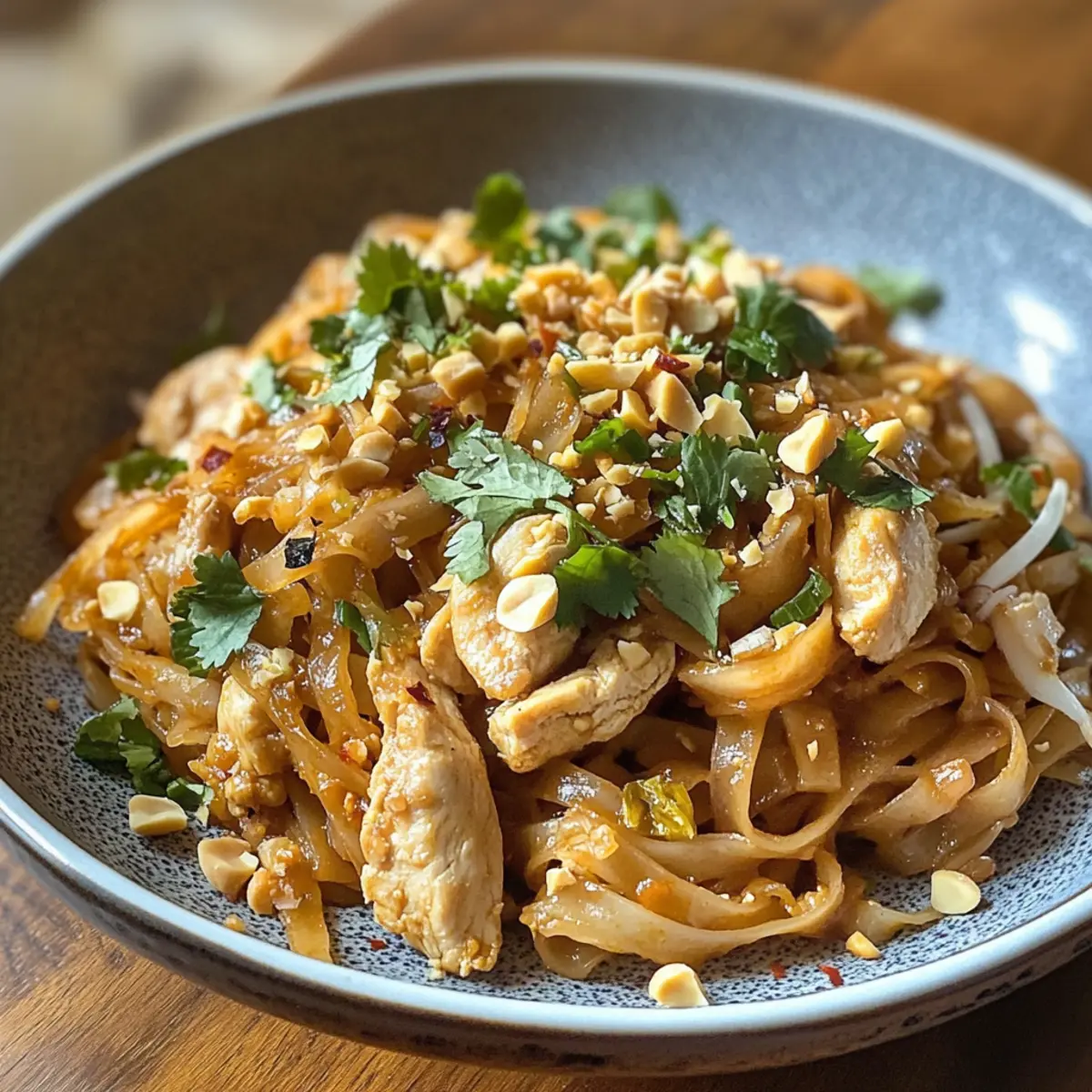
Why Choose Keto Pad Thai?
Quick and Easy: This recipe offers a fantastic way to whip up an authentic-tasting pad thai in just 30 minutes! Perfect for busy weeknights or unexpected guests, you’ll have a delicious meal on the table in no time.
Guilt-Free Indulgence: With minimal carbs, this keto version allows you to savor all the beloved flavors without the post-meal guilt. It’s a smart choice for those watching their carb intake, making it a fantastic alternative to takeout.
Versatile Delight: You can easily customize it by swapping chicken for shrimp or tofu, or by adding a medley of veggies like bell peppers and broccoli for extra nutrition. The possibilities are endless!
Crowd-Pleasing Flavor: The combination of savory fish sauce, creamy peanut butter, and spicy sambal oelek creates an irresistible flavor profile that will impress even the pickiest eaters. Perfect for family dinners or meal prep!
Easy Ingredients: Most ingredients are pantry staples, making this dish not only delicious but also convenient to prepare. If you love quick dishes like this, you might also enjoy our Thai Fried Chicken to add to your recipe rotation!
Nutrient-Packed: Each serving is rich in protein and low in carbohydrates, offering a balanced option that supports a healthy lifestyle while still tasting indulgent.
Keto Pad Thai Ingredients
For the Sauce
• Fish Sauce – Adds a nice salty kick; Use vegan fish sauce for a plant-based option.
• Rice Vinegar – Provides a tangy, slightly sweet flavor; Opt for unseasoned for best results.
• Sambal Oelek (Chili Paste) – Brings heat and depth; Adjust quantity based on your spice preference.
• Peanut Butter – Adds creaminess and a traditional flavor; Substitute with almond butter if allergic to peanuts.
• Coconut Aminos or Soy Sauce – Offers a salty umami flavor; Coconut aminos are great for a gluten-free option.
• Fresh Lime Juice – Adds brightness and acidity; Bottled lime juice can be used in a pinch.
• Liquid Stevia – Provides sweetness without carbs; Adjust to taste; other keto-friendly sweeteners work as well.
For the Noodles and Chicken
• Shirataki Noodles – Offers a low-carb alternative to rice noodles; Must be rinsed and dried thoroughly before cooking.
• Chicken Breast – Primary protein source; Chicken thighs can be used for added flavor if preferred.
• Eggs – Enhances protein content and flavor; Beaten prior to adding to the skillet for even cooking.
For the Aromatics and Toppings
• Ginger (Fresh) – Adds warmth and spice; Ground ginger can be used in smaller amounts if necessary.
• Garlic (Fresh) – Provides aromatic flavor depth; Fresh is recommended for optimal taste.
• Scallions (Green Onions) – Add color and mild onion flavor; Slice white parts and green tops separately for better presentation.
• Mung Bean Sprouts – Traditional addition for crunch; Shredded cabbage or zucchini can be substituted for variety.
• Peanuts (Chopped) – Adds crunch and nutty flavor; Sunflower seeds make a great nut-free alternative.
• Cilantro (Chopped) – Fresh herb to garnish; Basil or parsley can also be used if preferred.
Step‑by‑Step Instructions for Keto Chicken Pad Thai
Step 1: Prep Produce
Start by washing and slicing the scallions, keeping the white parts separate from the greens for garnish later. Mince the fresh garlic and ginger, ensuring they’re finely chopped to release their aromatic flavors. Finally, chop the cilantro for a fresh, vibrant garnish. Setting these ingredients aside prepares you for a smooth cooking process.
Step 2: Prep Chicken
Butterfly the chicken breasts to create a thinner cut and then chop them into bite-sized pieces. This technique ensures the chicken cooks evenly and quickly in your skillet. Place the chicken in a bowl and season lightly if desired, so it’s ready for a robust flavor infusion during the stir-fry.
Step 3: Make Sauce
In a medium bowl, whisk together the fish sauce, rice vinegar, sambal oelek, peanut butter, coconut aminos, fresh lime juice, and liquid stevia. Aim for a smooth texture, blending the ingredients until well incorporated. This vibrant sauce will add layers of flavor to your Keto Chicken Pad Thai, so set it aside for later use.
Step 4: Cook Aromatics
Heat a wok or large pan over medium-high heat and add a splash of oil. Once shimmering, toss in the minced ginger and garlic, stirring for about 30 seconds until fragrant. Then, add the scallion whites and continue to sauté for 2-3 minutes until soft and aromatic, creating an enticing base for your dish.
Step 5: Stir-Fry Chicken
Now, add the prepared chicken pieces to the aromatic mixture in the wok. Stir-fry the chicken for about 5 minutes, cooking until it’s golden brown and fully cooked through. Pay attention to achieving a nice sear, which will enhance the flavor profile of your Keto Pad Thai.
Step 6: Prepare Noodles
While the chicken cooks, rinse the shirataki noodles thoroughly under cold water. Make sure to dry them off using paper towels or a clean kitchen cloth. This step is vital to remove any residual odor and excess moisture, which would otherwise affect the dish’s overall taste and texture.
Step 7: Cook Noodles
Remove the chicken mixture from the pan and set it aside, keeping it warm. In the same wok, add the rinsed shirataki noodles and dry-fry them for 5-7 minutes. Stir continuously to help evaporate moisture and achieve a firmer texture, which is essential for a delightful noodle experience in your Keto Chicken Pad Thai.
Step 8: Add Eggs
Creating a well in the center of the noodles, pour in the beaten eggs. Let them cook for 2-3 minutes, stirring gently to scramble them with the noodles until fully set and cooked. This adds a lovely richness and protein boost, vital for completing your flavorful dish.
Step 9: Combine Ingredients
Return the cooked chicken mixture back to the wok, adding the crisp mung bean sprouts and the pre-made sauce. Stir-fry everything together for 2-3 minutes, ensuring the noodles, chicken, and veggies are well-coated in the delicious sauce, allowing the flavors to meld beautifully.
Step 10: Serve
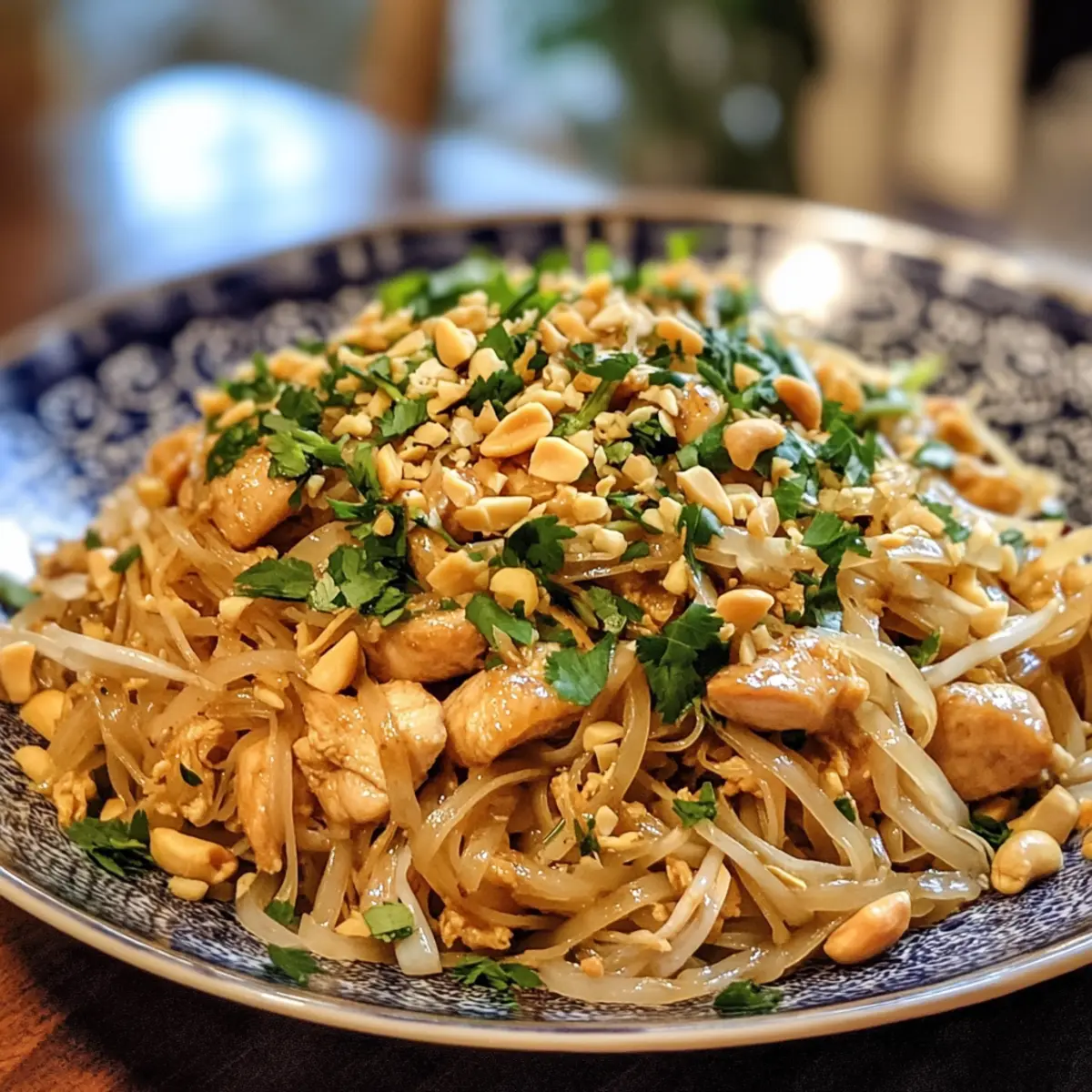
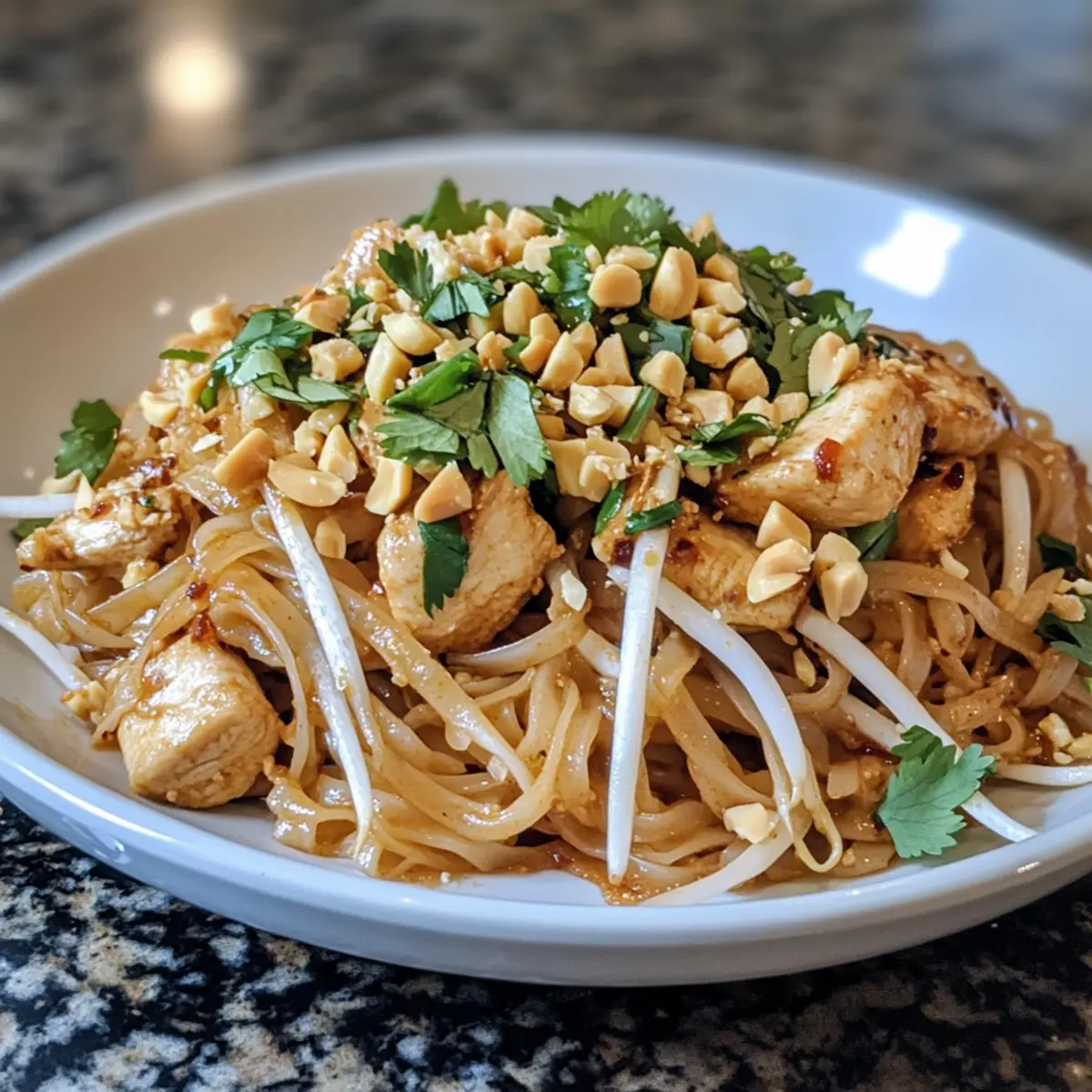
Once everything is well combined and heated through, remove the pan from the heat. Serve the Keto Chicken Pad Thai piping hot, garnished with sliced scallion greens, crushed peanuts for crunch, and chopped cilantro for a fresh finishing touch. Savour the bright and fulfilling flavors of this dish!
How to Store and Freeze Keto Pad Thai
Fridge: Store leftovers in an airtight container for up to 3 days. This keeps the flavors intact while ensuring your delicious Keto Pad Thai remains fresh and ready for quick meals.
Freezer: While not recommended for the noodles, you can freeze the chicken and sauce mixture for up to 2 months. Just remember to thaw it overnight in the fridge before reheating.
Reheating: To enjoy your Keto Pad Thai again, reheat in a pan over medium heat or in the microwave. Additionally, you can add a splash of water or broth to revive some moisture during reheating.
Airtight Storage: Always keep items sealed properly in airtight containers to maintain freshness and prevent freezer burn, especially if you choose to freeze parts of your dish.
Expert Tips for Keto Pad Thai
-
Rinse Noodles: Thoroughly rinse shirataki noodles to remove their natural odor, ensuring a pleasant texture and taste in your Keto Pad Thai.
-
Uniform Chicken Pieces: Cut chicken into uniform pieces for even cooking; this will help you achieve a perfectly tender and flavorful stir-fry.
-
Temperature Control: Keep your pan hot! A sizzling wok is essential for sautéing ingredients properly without steaming them, enhancing flavor and texture.
-
Customize Spice Level: Adjust the sambal oelek according to your spice preference; starting with less ensures you can control the heat without overwhelming the dish.
-
Prep in Advance: Have all your ingredients prepped and ready before you start cooking; this not only streamlines the process but also avoids missing any key steps.
Keto Pad Thai Variations & Substitutions
Feel free to make this Keto Pad Thai your own by exploring these delightful variations!
-
Protein Swap: Replace the chicken with shrimp, tofu, or a combination of veggies for a vegetarian twist. Each option brings its unique texture and flavor, making it a versatile dish for various dietary preferences.
-
Nut-Free Option: Substitute peanuts with sunflower seeds or pumpkin seeds to keep the crunch while ensuring a nut-free meal. This isn’t just a swap—it’s a way to cater to those with allergies while still enjoying that satisfying crunch!
-
Zoodles or Spaghetti Squash: Swap shirataki noodles for zucchini noodles or spaghetti squash to change up the base of your dish. Zoodles bring a fresh crunch, while spaghetti squash offers a naturally sweet flavor that complements the sauce beautifully.
-
Spicy Boost: Amp up the heat with extra sambal oelek or a sprinkle of red pepper flakes. A little kick can transform your dining experience, making it even more tantalizing!
-
Veggie Medley: Enhance nutrition by adding bell peppers, broccoli, or snap peas. You can sauté them alongside the chicken for added color and flavor, making your dish a rainbow of delightful textures.
-
Sweetener Alternatives: If you prefer, swap stevia for a different keto-friendly sweetener like erythritol or monk fruit. Adjust the amount to taste, ensuring the sauce remains beautifully balanced.
-
Fresh Herbs Variety: Replace cilantro with basil or parsley if you’re looking for a different fresh herb finish. Each herb offers a unique aroma and flavor, allowing you to enjoy a variety of tastes.
For more inspiration, don’t miss our Thai Fried Chicken recipe. It’s another fantastic way to enjoy Thai flavors while keeping the meal exciting at home!
Make Ahead Options
These Keto Chicken Pad Thai components are perfect for meal prep, allowing you to create a delicious dinner with minimal effort on busy weeknights! You can prepare the sauce and store it in the refrigerator for up to 3 days in an airtight container, ensuring the flavors meld beautifully. Additionally, chop the vegetables and chicken, keeping them separated in the fridge for up to 24 hours. When you’re ready to serve, simply stir-fry the prepped ingredients and noodles, add the sauce, and cook until everything is heated through. This way, you can enjoy the same vibrant flavors of Keto Chicken Pad Thai with just a quick finish, saving precious time!
What to Serve with Keto Chicken Pad Thai?
The rich flavors and vibrant textures of this low-carb dish open up a world of delightful pairings to complete your meal experience.
-
Cucumber Salad: This light, refreshing salad adds crunch and a cooling effect that beautifully contrasts the warm, flavorful Pad Thai. Toss it with lime and mint for a refreshing zing.
-
Thai Spring Rolls: Crisp and filled with fresh vegetables, these rolls are a perfect side to complement the bold flavors of the pad thai. Serve with a tangy dipping sauce for an excellent addition to the meal.
-
Steamed Broccoli: Tender broccoli florets not only add a burst of color but also provide wholesome fiber, creating a nutritious balance with the rich sauce of the pad thai.
-
Miso Soup: This warm, umami-rich soup brings a comforting touch to dining. It’s a soothing choice that pairs well with the spicy and savory notes of your Keto Chicken Pad Thai.
-
Jasmine Rice: A small scoop of fluffy jasmine rice can be a simple addition if you’re not strictly adhering to keto. It balances out the dish, absorbing the delightful sauce.
-
Sparkling Water with Lime: Refreshing and zesty, sparkling water is a perfect thirst-quencher that complements the bold flavors without overpowering them. Opt for flavored varieties for an interesting twist.
-
Peanut Butter Chocolate Fat Bombs: For a sweet finish, these keto-friendly desserts echo the nutty flavors of the pad thai while satisfying any sweet tooth.
-
Sesame Ginger Dressing: Drizzle this flavorful dressing over any side salad to create a cohesive theme that echoes the spices of the pad thai.
Enjoy your culinary adventure as you mix and match these sides to create the perfect dining experience!
Keto Chicken Pad Thai Recipe FAQs
How do I select the right shirataki noodles?
Absolutely! When choosing shirataki noodles, look for those that are free from additives and preservatives. They should be packed in water to prevent drying out. I recommend checking the label for quality brands, and make sure they are labeled as “noodles” and not “rice.” Rinsing them thoroughly before use will significantly improve their flavor and texture.
How should I store leftovers?
Store any leftover Keto Chicken Pad Thai in an airtight container in the refrigerator for up to 3 days. Make sure to let it cool down to room temperature before sealing it to prevent moisture build-up. When reheating, I often recommend using a pan over medium heat or a microwave, adding a splash of water or broth to keep it moist and flavorful.
Can I freeze Keto Chicken Pad Thai?
Yes, but with some caveats! While you can freeze the chicken and sauce mixture for up to 2 months, I advise against freezing the shirataki noodles, as they can become mushy. To freeze, let your chicken and sauce mixture cool completely, then transfer it to a freezer-safe container. When you’re ready to enjoy, thaw it overnight in the refrigerator.
What if I have a nut allergy?
Very importantly, if you have a nut allergy, you can easily modify this recipe. Just replace peanut butter with sunflower seed butter or tahini for a similar creamy texture without the nuts. Also, make sure to choose sunflower seeds instead of peanuts for the garnish to maintain the delicious crunch!
How can I prevent my noodles from becoming soggy?
A great tip to avoid soggy noodles is to thoroughly rinse your shirataki noodles and dry-fry them in the wok before adding your other ingredients. This helps to remove excess moisture, which is crucial for achieving that perfect chewy texture. Additionally, ensure that your wok is hot enough to impart a good sear to your ingredients during each step of cooking.
Is this recipe suitable for kids or picky eaters?
Absolutely! The rich flavors and textures of this Keto Chicken Pad Thai make it a hit with both kids and picky eaters. You can customize the spice level by adjusting the sambal oelek, so it suits everyone’s taste buds. Offering a colorful presentation with bright veggies and crunchy toppings can also make it more appealing to young eaters!
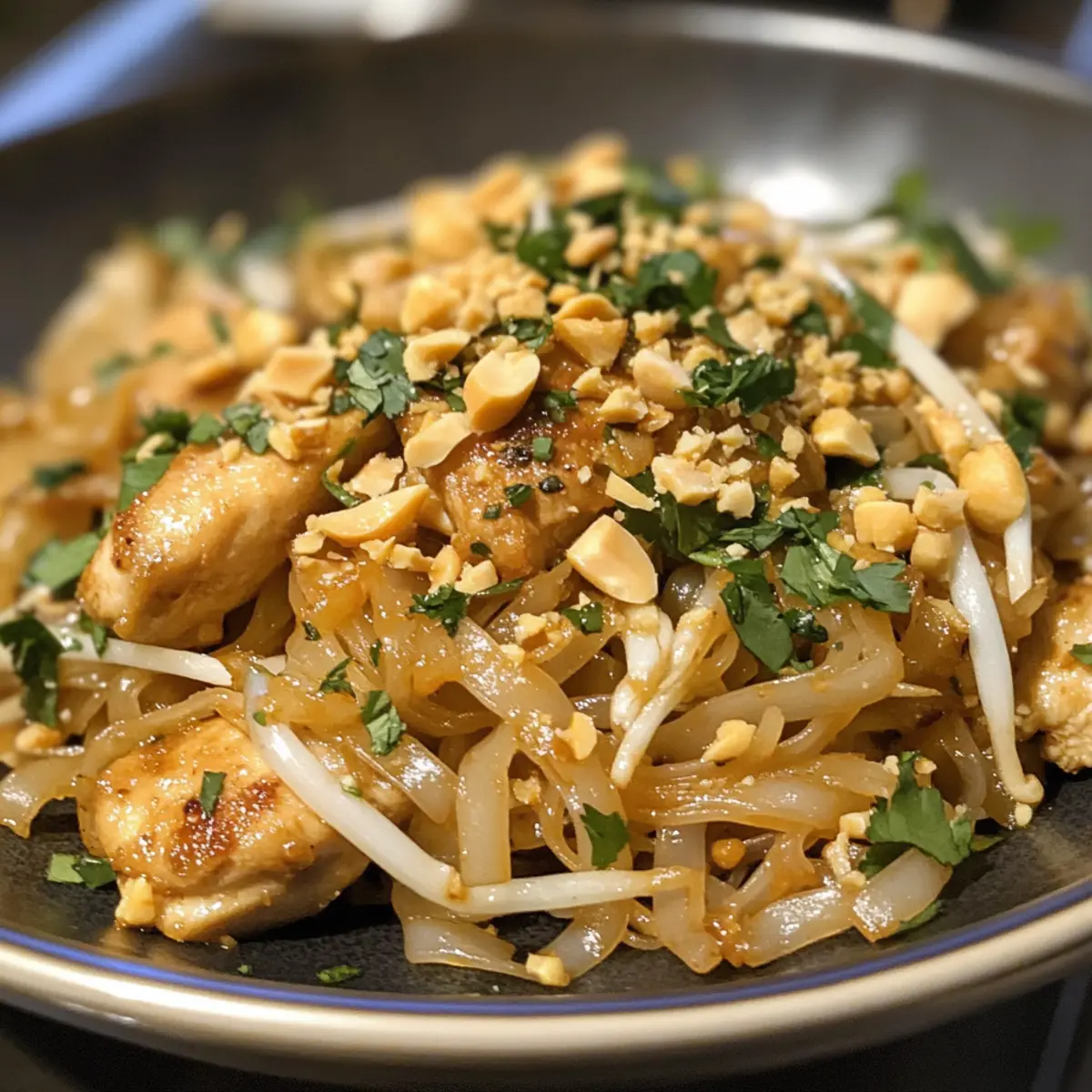
Irresistible Keto Pad Thai in 30 Minutes - Low-Carb Delight
Ingredients
Equipment
Method
- Start by washing and slicing the scallions, keeping the white parts separate from the greens for garnish later. Mince the fresh garlic and ginger, ensuring they're finely chopped to release their aromatic flavors. Finally, chop the cilantro for a fresh, vibrant garnish. Setting these ingredients aside prepares you for a smooth cooking process.
- Butterfly the chicken breasts to create a thinner cut and then chop them into bite-sized pieces. This technique ensures the chicken cooks evenly and quickly in your skillet. Place the chicken in a bowl and season lightly if desired.
- In a medium bowl, whisk together the fish sauce, rice vinegar, sambal oelek, peanut butter, coconut aminos, fresh lime juice, and liquid stevia until smooth. This vibrant sauce will add layers of flavor to your Keto Chicken Pad Thai.
- Heat a wok over medium-high heat and add a splash of oil. Once shimmering, toss in the minced ginger and garlic, stirring for about 30 seconds until fragrant. Add the scallion whites and continue to sauté for 2-3 minutes until soft.
- Add the prepared chicken pieces to the wok, stir-fry for about 5 minutes, cooking until golden brown and fully cooked through.
- While the chicken cooks, rinse the shirataki noodles thoroughly under cold water and dry them off using paper towels.
- Remove the chicken mixture from the pan and set it aside, keeping it warm. In the same wok, add the rinsed shirataki noodles and dry-fry for 5-7 minutes, stirring continuously.
- Create a well in the center of the noodles, pour in the beaten eggs. Let them cook for 2-3 minutes, stirring gently to scramble them until fully set.
- Return the cooked chicken mixture back to the wok, adding the crisp mung bean sprouts and the pre-made sauce. Stir-fry everything together for 2-3 minutes, ensuring everything is well-coated in the sauce.
- Serve the Keto Chicken Pad Thai piping hot, garnished with sliced scallion greens, crushed peanuts, and chopped cilantro.